
In the Service of Sacred Music
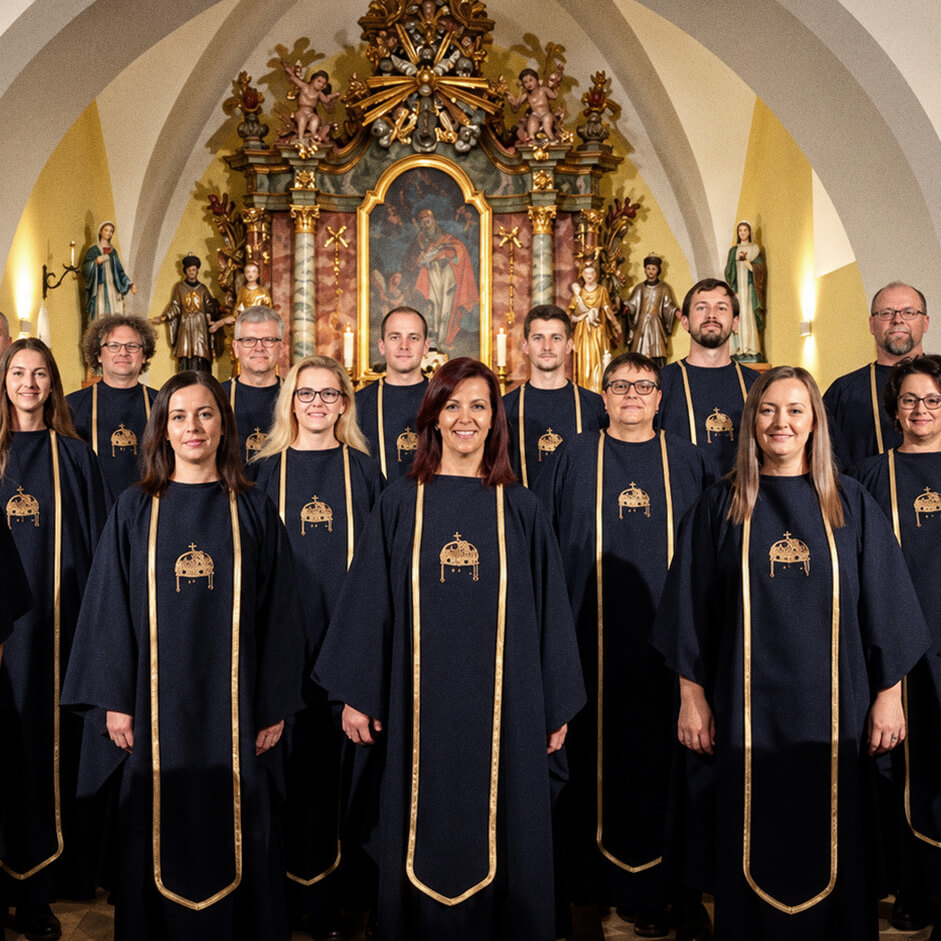
The Szent Korona Choir of Balog nad Ipľom was founded in 1997 and from the very beginning has been committed to Musica Sacra, the tradition of sacred music. Its primary mission was to provide musical service for the liturgy in churches in Balog nad Ipľom and the surrounding area. Over time, its activities expanded to include concert performances and appearances at international events.
The choir takes its name from the replica of the Holy Crown displayed on the tower of St. Nicholas Church in Balog nad Ipľom. Over nearly three decades, the choir has carried the name of Balog nad Ipľom to numerous ecclesiastical music and cultural events, as well as concert venues, both at home and abroad.
The History of the Choir
The idea of establishing the Szent Korona Choir emerged as early as the beginning of the 1990s. Mons. Tibor Montskó, a Papal Chaplain, played an important role in promoting its foundation and is regarded as the choir’s spiritual father. The choir was formally established in 1997, and Ottó Molnár has led the ensemble from the very beginning.
In its early years, the choir’s primary activity centred on providing musical service for the liturgy in the churches of Balog nad Ipľom and the surrounding area. Singing together and holding regular rehearsals gradually shaped a community in which, alongside their musical work, the members also strengthened their personal bonds and sense of belonging.
Founded in 1997
The Szent Korona Choir was established in Balog nad Ipľom in 1997.
An Initiative of Mons. Tibor Montskó
Mons. Tibor Montskó, a Papal Chaplain, played an important part in initiating the foundation of the choir and is regarded as its spiritual father.
Rooted in the Liturgy
The choir’s first opportunities to perform came through its musical ministry in the liturgy at churches in Balog nad Ipľom and the surrounding area. This liturgical service later became the foundation for its concert activities.
Sacred Music and a Rich Repertoire
Sacred music stands at the heart of the artistic work of the Szent Korona Choir. Its repertoire ranges from Gregorian chant through Renaissance, Baroque, and Romantic sacred music to contemporary Hungarian church music. The choir’s programmes therefore bring together the centuries-old heritage of sacred music with works by contemporary Hungarian composers.
Gregorian Chant
Gregorian sacred music forms one of the important foundations of the choir’s repertoire.
Renaissance and Baroque
Sacred works from the Renaissance and Baroque periods have a prominent place in the choir’s repertoire.
Romantic Sacred Music
The sacred music tradition of the Romantic period is also represented in the choir’s artistic programme.
Contemporary Hungarian Sacred Music
The choir also performs works by contemporary Hungarian composers of sacred music.
Liturgical Ministry
Service through sacred music remains at the foundation of the Szent Korona Choir’s work. Singing during the liturgy is not simply a concert-style performance for the choir, but a musical ministry that forms part of worship.
During the choir’s early years, its principal opportunities to perform came through liturgical service in the churches of Balog nad Ipľom and the surrounding area. This close connection with the liturgy has remained an important part of its work ever since.
Singing in the Liturgy
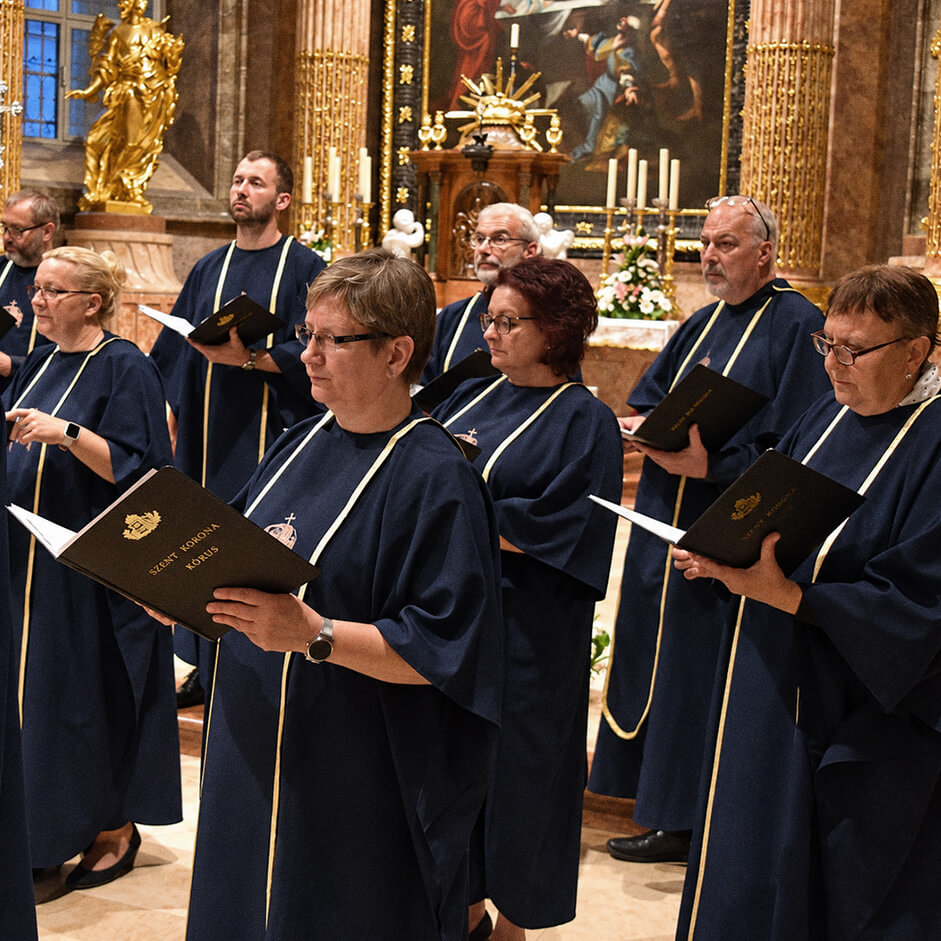
The choir contributes to the musical ministry of Holy Mass and other liturgical celebrations through its performance of sacred music.
In Balog nad Ipľom
Naturally, one of the most important places in the choir’s activity is its own community and the parish community gathered in its churches.
Sacred Music in Concert
Sacred works are also performed in a concert setting, allowing the choir to present its repertoire to a wider audience beyond its liturgical ministry.
From the Liturgy to the Concert Stage
As the Szent Korona Choir developed, concert activity gradually became an increasingly important part of its work alongside its local liturgical ministry. The choir has performed at numerous venues in Hungary and abroad, including Budapest, Vienna, Rome, Padua, Salzburg, Bratislava, and Brussels.
Its performances have taken place in churches, cathedrals, concert halls, and cultural institutions alike. On several occasions, the choir has also sung at venues of particular significance to Europe’s ecclesiastical and musical heritage.
Hungary
In Budapest, the choir has performed, among other places, at St. Stephen’s Basilica, Matthias Church, the Liszt Academy of Music, and Pesti Vigadó.
European Churches
Their international appearances include performances in Rome, Vienna, Salzburg, Bratislava, Olomouc, Brussels, and Kraków.
International Concert Activity
Over the past decades, the choir has appeared in numerous European countries, and its concert work has extended far beyond the borders of Balog nad Ipľom.
Works Connected with Balog nad Ipľom
One of the particularly significant chapters in the history of the Szent Korona Choir is its presentation of sacred musical works associated with the Holy Crown. The choir is associated with the premieres of Tamás Daróci Bárdos’s Szent Korona Mass and the work Hymn to the Holy Crown. The premiere of the Szent Korona Mass formed part of the festive event held in Balog nad Ipľom in 2005.
Szent Korona Mass
At the 2005 premiere of Tamás Daróci Bárdos’s composition, the Szent Korona Mass was performed by the Szent Korona Choir of Balog nad Ipľom.
Hymn to the Holy Crown
The premiere of this work is likewise associated with the choir and took place as part of the festive programme of the Feast of the Holy Crown in 2005.
Music and Local Heritage
The choir’s artistic work brings together sacred music with the historical and cultural heritage associated with Balog nad Ipľom.
Competitions and Awards
Over the past decades, the Szent Korona Choir has achieved notable results at several national and international competitions. In 1999, at the 11th Kodály Days, and in 2001, at the International Choir Competition in Námestovo, the choir received a Silver Band rating. In 2002, at the 12th Kodály Days, it was awarded a Gold Band rating with praise from the jury.
KÓTA Award
In 2022, the choir received the KÓTA Award. The distinction recognised its high-level interpretation of Musica Sacra, particularly contemporary Hungarian sacred music, as well as its work in preserving and passing on national traditions.
Wass Albert Award
In January 2023, the Szent Korona Choir of Balog nad Ipľom received the Wass Albert Award. The distinction was awarded in recognition of its work in protecting cultural heritage and supporting the preservation of Hungarian identity.
Kodály Days, 2026
At the 20th anniversary Kodály Days in 2026, the Szent Korona Choir received a Gold Band rating with praise from the jury and was named the overall winner of the competition.
Choir Leadership
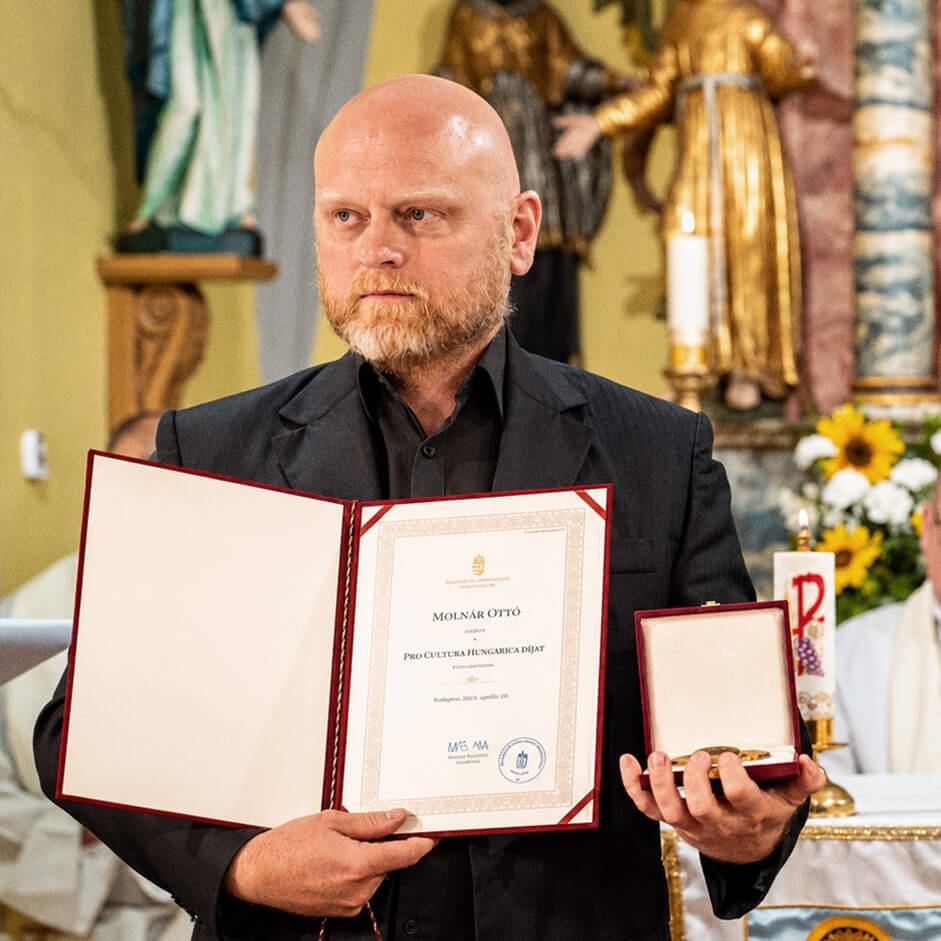
The Szent Korona Choir is under the professional and artistic direction of conductors Ottó Molnár and Károly Pászti, while Márk Czibulya serves as its president. Ottó Molnár has led the choir since its foundation and, together with Károly Pászti, is responsible for guiding its artistic work. Márk Czibulya is one of the choir’s founding members and serves as its president.
Ottó Molnár
Conductor and one of the choir’s artistic directors. He has served as conductor of the ensemble since its foundation.
Károly Pászti
Conductor and, alongside Ottó Molnár, the choir’s other artistic director.
Márk Czibulya
Founding member and president of the choir, also involved in the organisational and technical responsibilities of the ensemble.
The Szent Korona Choir and Balog nad Ipľom
The Szent Korona Choir is more than simply a choir based in Balog nad Ipľom. Its name, history, and artistic identity are closely connected with the town’s ecclesiastical and cultural heritage.
Taking its name from the tradition associated with St. Nicholas Church in Balog nad Ipľom and the local heritage of the Holy Crown, the choir has carried this connection beyond its home community and, over nearly three decades, has represented Balog nad Ipľom at numerous venues across Europe.
The Service of Music
The story of the Szent Korona Choir began with liturgical ministry and later extended to concert halls, cathedrals, and international events in the choral world. Sacred music, however, remains at the heart of its work, spanning Gregorian chant, the major historical periods of sacred music, and contemporary Hungarian compositions.
The choir’s work is closely connected with the life of the churches in Balog nad Ipľom, the tradition of sacred music, and the cultural heritage that the ensemble has helped preserve and pass on through its service for nearly three decades.
Connection with the Parish Community
The Szent Korona Choir has a distinctive place within the life of the parish community. Through its liturgical ministry, it is directly connected with the life of the church, while its concerts and cultural performances also reach audiences beyond Balog nad Ipľom.
The choir’s work therefore brings together three dimensions: service to the Church, musical activity, and participation in the cultural life of Balog nad Ipľom.
Music That Connects the Past and the Present
Since its formation in 1997, the history of the Szent Korona Choir has brought together liturgical ministry, the tradition of sacred music, and concert performance within a single community. Its repertoire ranges from Gregorian chant to contemporary Hungarian church music. Although these works come from different periods, they remain rooted in the same tradition of sacred music.
Founded and based in Balog nad Ipľom, the choir now brings with it extensive experience of international choral life, while remaining closely connected to the church and community service from which its journey began.