
The Hungarian Holy Crown
The Hungarian Holy Crown is one of the most important symbols of Hungarian statehood and the Christian Kingdom of Hungary. For centuries, its history has been closely connected with the coronation of Hungarian kings, the history of the country, and the places where the crown was kept at different times.
Balog nad Ipľom holds a distinctive place in this history. According to local tradition, the Holy Crown was kept here for one night in 1304, when King Wenceslaus of Hungary left the country together with the coronation regalia. The memory of this tradition has been preserved by the local community for centuries, and today a faithful replica of the Holy Crown can also be seen in the church.
The Holy Crown
One of the most important symbols in Hungarian history, closely associated with the tradition of Christian statehood and the Kingdom of Hungary.
Details of the Crown
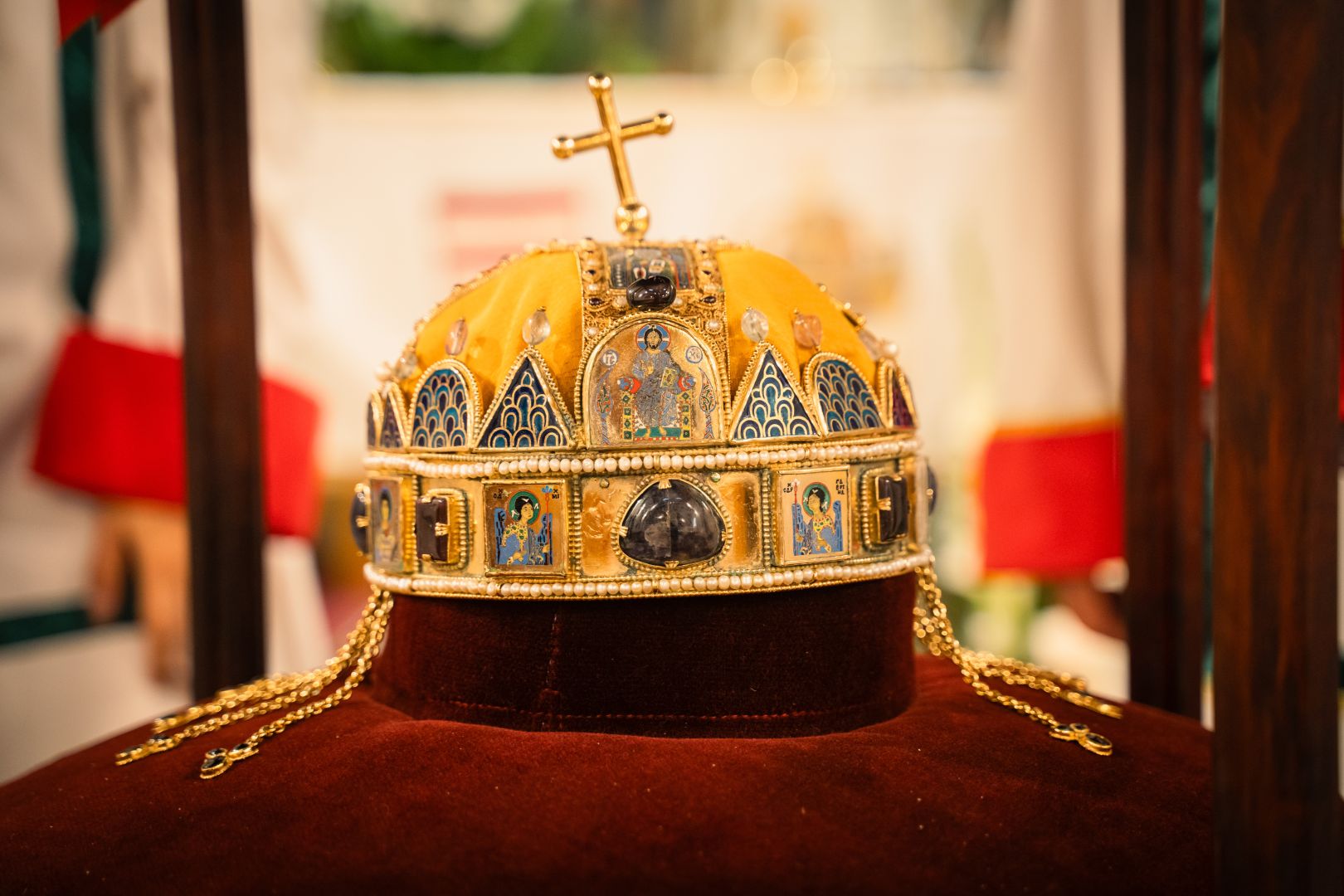
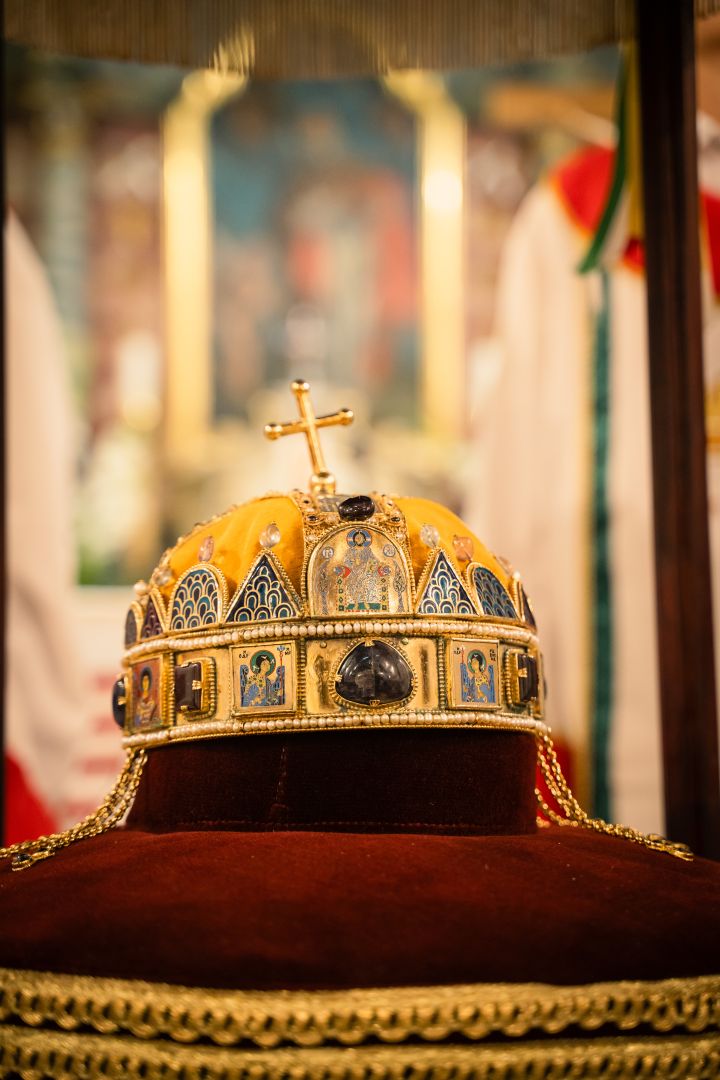
The Holy Crown is richly decorated with enamel images, gemstones, and gold ornaments. Its upper section is formed by crossing bands bearing Latin inscriptions and depictions of the Apostles.
The Crown of the Kingdom of Hungary
The Holy Crown was more than a royal headdress. During the Middle Ages and the early modern period, it became one of the most important symbols of the constitutional order of the Kingdom of Hungary. The coronation of a Hungarian king held particular significance, and beyond its role in the coronation ceremony, the Holy Crown came to symbolise the country’s historical statehood. Its history can be traced back more than eight centuries. The first authentic written reference dates from 1256, and throughout its history the Crown was moved from one place to another many times as a result of wars, disputes over the throne, efforts to secure it, and political changes.
The history of the Holy Crown is not tied to a single city. Over the centuries, it was kept in numerous important towns and fortresses of the Kingdom of Hungary.
The 1304 Story of Balog nad Ipľom
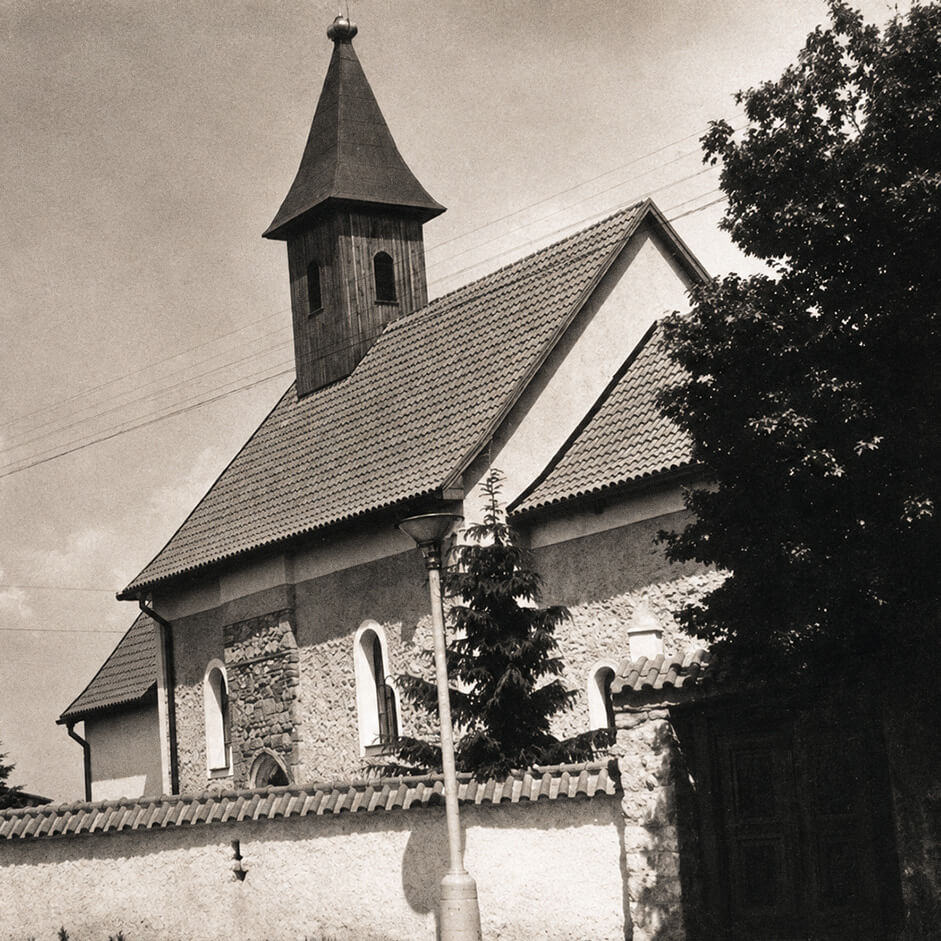
The tradition of Balog nad Ipľom associated with the Holy Crown dates back to the period of the struggle for the Hungarian throne between the Angevins and the Přemyslid dynasty. In 1304, King Wenceslaus II of Bohemia took his son Wenceslaus, who had been crowned King of Hungary in 1301, out of Hungary and took the coronation regalia with him. According to local tradition, on the journey to Prague the Holy Crown was kept for one night in St. Nicholas Church in Balog nad Ipľom. Tradition holds that in August 1304 the Crown was guarded in the church while Wenceslaus spent the night in the settlement. To this day, the tradition of Balog nad Ipľom preserves the event as one of the most important memories in the history of the local community.
The Memory of the Holy Crown
The history of the Holy Crown in Balog nad Ipľom has remained part of the community’s living memory. According to local tradition, the memory associated with the Crown was preserved for generations and was later reflected in the crown motif placed on the church tower.
Local tradition traces the origins of the tower crown to an order issued by King Matthias in 1464. This tradition forms an integral part of the local memory of the Holy Crown and remains part of the story of the crown decoration on the church, preserved by the community to this day.
The Crown Returns
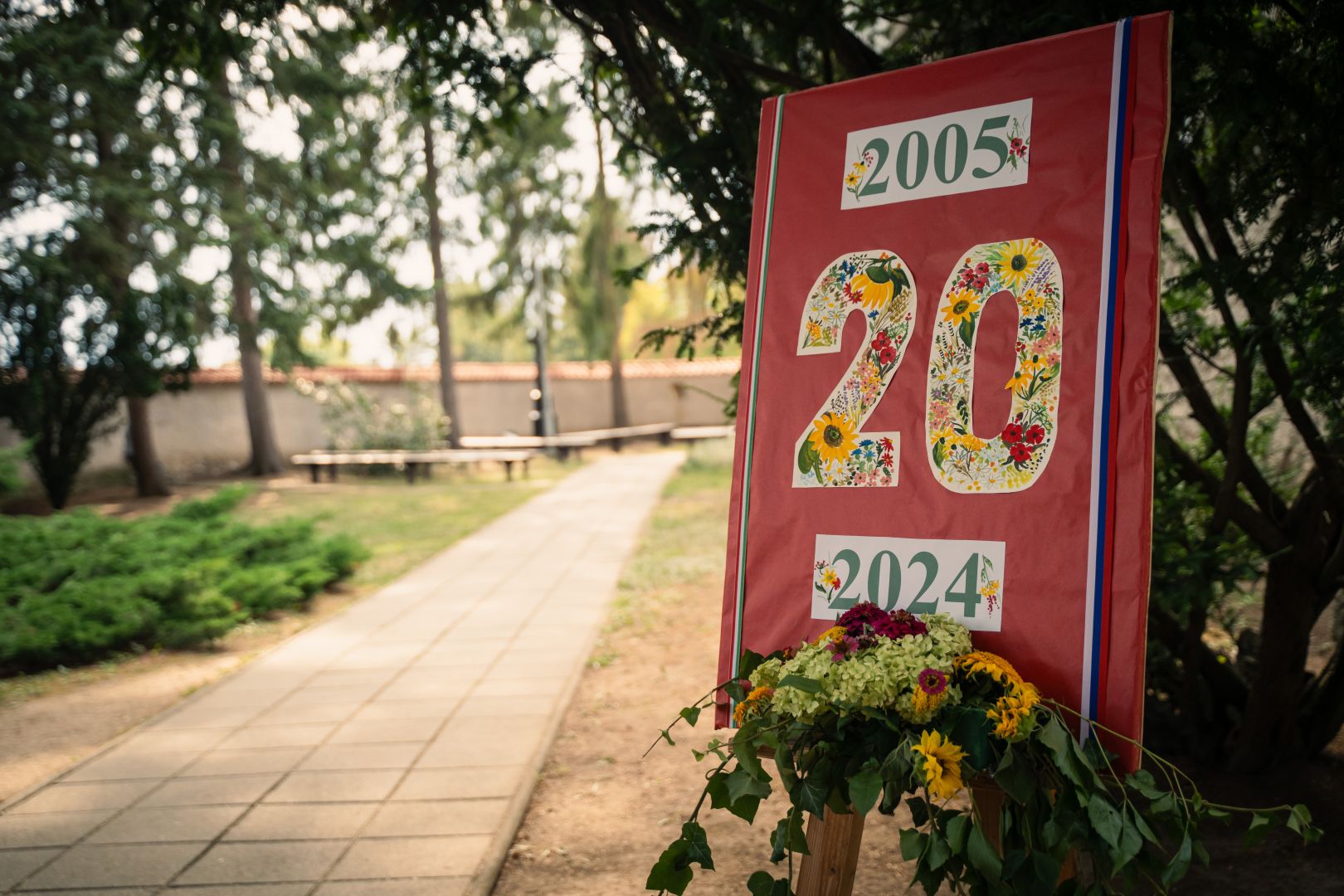
In 2005, a faithful replica of the Holy Crown arrived in Balog nad Ipľom. Created by goldsmith and metal artist Kevi Farkas, the replica was ceremonially placed in St. Nicholas Church on 14 August 2005. Since then, the Crown has been one of the church’s notable features and an important part of Balog nad Ipľom’s tradition associated with the Holy Crown.
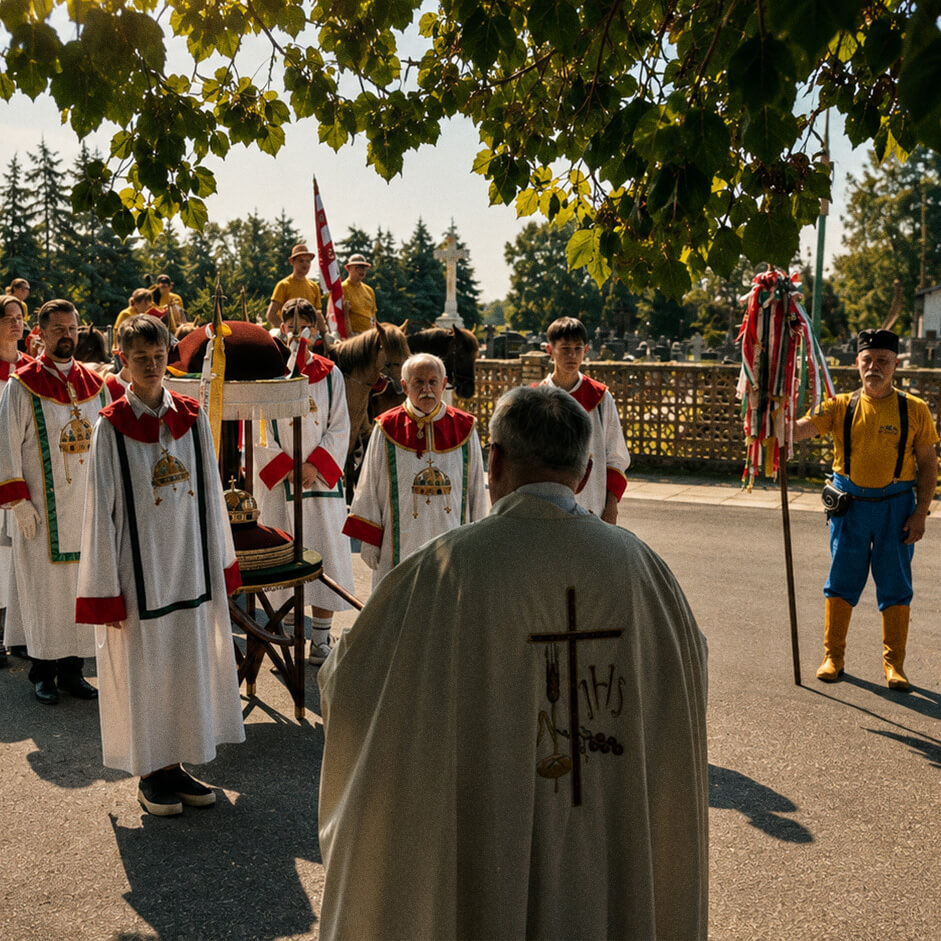
The arrival of the replica also gave rise to the annual Feast of the Holy Crown, which has since become one of the significant religious and community events in Balog nad Ipľom.
Historical Places Where the Holy Crown Was Kept
Throughout its history, the Holy Crown was repeatedly moved to safer locations because of wars, disputes over the throne, and political changes. Some cities became established places of safekeeping over longer periods, while other locations were connected with the Crown only during particular escapes to safety or coronations.
Among the most important historical centres where the Crown was kept were Székesfehérvár, Visegrád, Buda, and Pozsony. At different times, it was also kept in Esztergom, Sopron, Vienna, Ecsed, Tokaj, Debrecen, Szeged, Arad, Orșova, Veszprém, Kőszeg, and Velem.
Evacuations and Exceptional Places of Safekeeping
During periods of historical danger, the Holy Crown was moved to safer places on several occasions. In 1849, its route passed through Debrecín, Segedín, Veľký Varadín, Arad, Lugož, and Karansebeš before reaching Orșava, where it was buried for safekeeping. At the end of the Second World War, Veszprém, Kőszeg, and Velem also became part of the Crown’s final route to safety.
Székesfehérvár
One of the most important medieval centres associated with the safekeeping of the Crown and the coronation of Hungarian kings. According to the sources, the Holy Crown was kept here from 1241 to 1304, and the city was a traditional coronation site for the Hungarian kings.
Visegrád
During the reign of Charles Robert, Visegrád became a royal centre and one of the most important places where the Crown was kept in the 14th century. From 1323 to 1403, it was safeguarded in the fortress of Visegrád.
Buda
By the late Middle Ages, Buda had become another important place of safekeeping for the Holy Crown. It was kept in the royal castle of Buda from 1403 to 1434 and later again played an important role in the history of the Crown.
Bratislava
After the Ottoman occupation of large parts of the Kingdom of Hungary, Bratislava became one of the kingdom’s most important coronation and safekeeping centres. Several Hungarian kings and queens were crowned in St. Martin’s Church between 1563 and 1830, and the city also played an important role in the history of the coronation regalia.
What Remains of This History Today?
Many towns and churches are connected with the history of the Holy Crown. Some served as places where the Crown was kept for longer periods, while others became important locations for coronations or key stages in the history of the coronation regalia. The memory of these places remains part of Hungary’s historical and ecclesiastical heritage.
Székesfehérvár
The medieval coronation city and the site of the royal basilica.
Bratislava
A historic centre associated with St. Martin’s Cathedral and an important chapter in the later coronations of Hungarian monarchs.
Sopron
A historic city connected with the Holy Crown and several coronation events.
Buda
One of the important centres associated with later Hungarian coronations and the history of the Holy Crown.
The Holy Crown as a Symbol of the Church
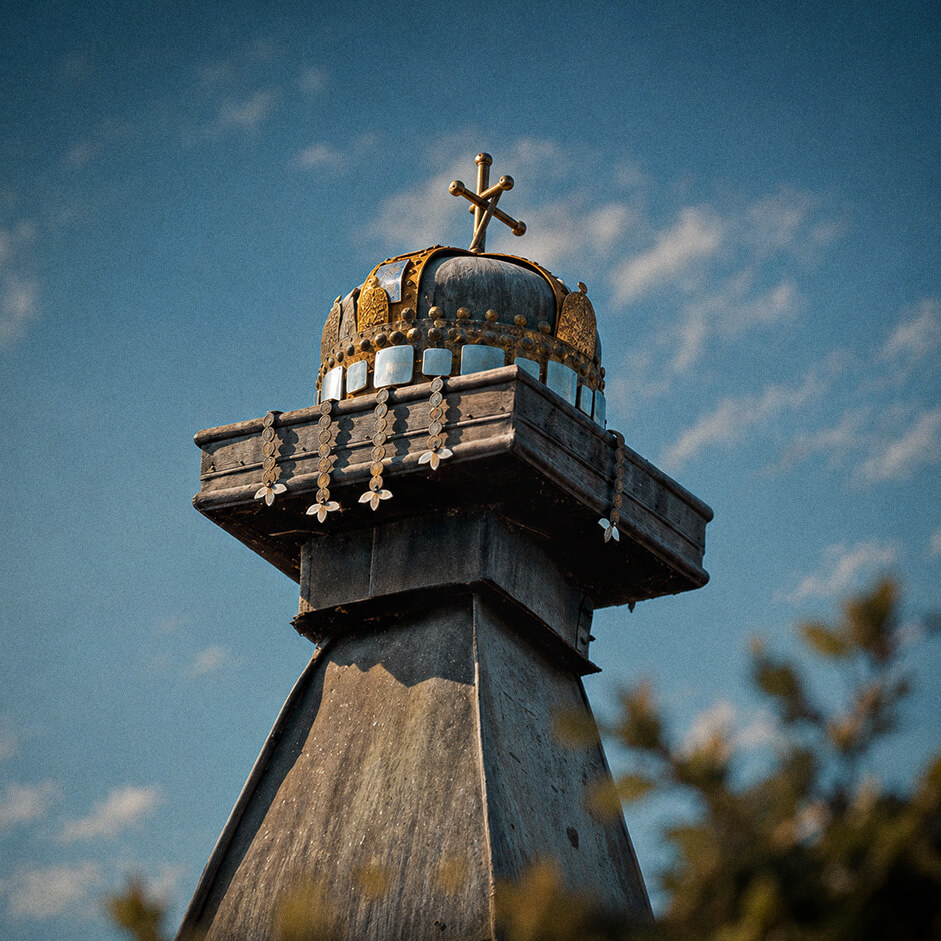
In later periods, depictions and replicas of the Holy Crown also appeared on church towers and other ecclesiastical buildings. Their presence, however, does not mean that the original Holy Crown was kept in the church concerned. The crown on the tower of St. Martin’s Church in Bratislava, for example, refers to the church’s role as a coronation church. The original crown placed on the tower in 1765 was destroyed by lightning in 1833. The version visible today was made in 1846 and later restored. St. Nicholas Church in Balog nad Ipľom is therefore distinctive in two respects: local tradition connects the church with the former safekeeping of the Holy Crown, while today a faithful replica of the Crown can also be seen inside the church.
Evacuation, Custody Overseas, and Return to Hungary
At the end of the Second World War, the Holy Crown once again had to be taken to safety. After the Coronation Regalia had left Hungary, they were eventually brought to Austria, where they were hidden near Mattsee in 1945. The United States Army later discovered the regalia, which were subsequently taken to the United States.
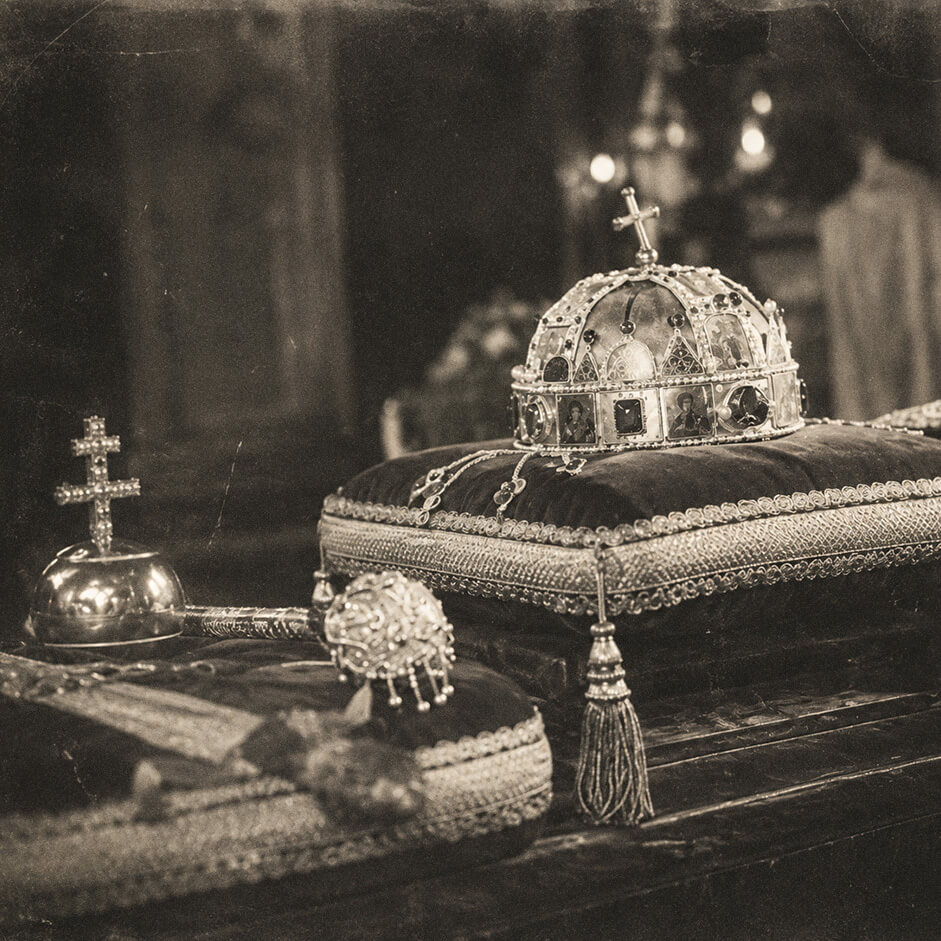
From 1951 to 1978, the Holy Crown was kept in the United States at Fort Knox. On 6 January 1978, it was formally returned to Hungary, and the Coronation Regalia were subsequently placed in the Hungarian National Museum. The Crown remained there for approximately twenty-two years.
On 1 January 2000, the Holy Crown and the other Coronation Regalia were moved to the Dome Hall of the Hungarian Parliament Building, where they have been kept ever since.
A Living Tradition
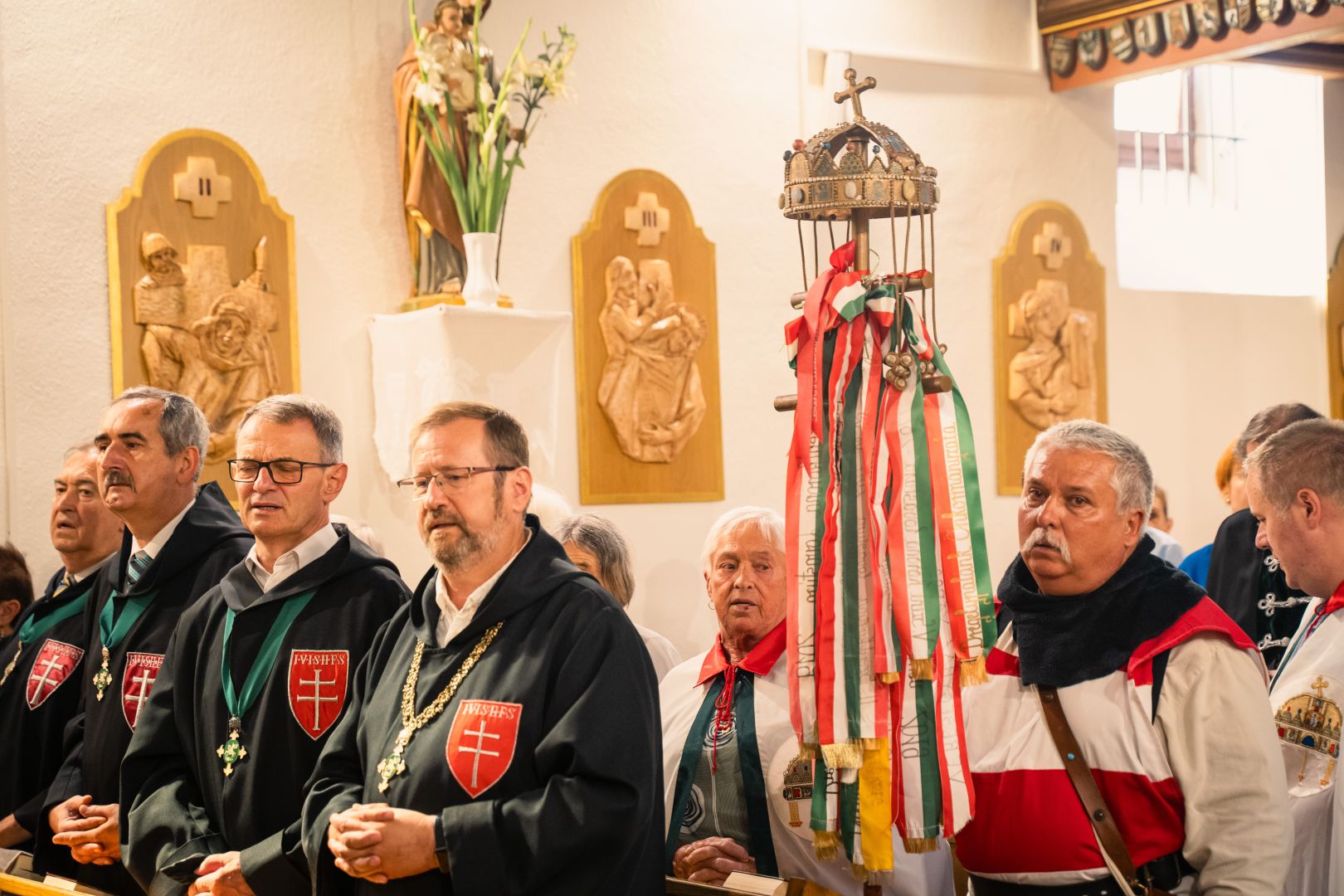
In Balog nad Ipľom, the memory of the Holy Crown is more than a matter of historical interest. It has become part of the parish’s religious and community life, while the faithful replica preserved in the church continues to hold an important place in the local tradition. Each year, the Feast of the Holy Crown brings the community together to commemorate the event associated with the history of the village. The celebration includes Holy Mass, a procession, and a programme of cultural and community events.
Frequently Asked Questions
No. A faithful replica of the Holy Crown is displayed in Balog nad Ipľom. The original Holy Crown is now kept in Budapest, in the Dome Hall of the Hungarian Parliament Building.
Throughout its history, the Holy Crown was kept for extended periods in several places. In the Middle Ages, Székesfehérvár and later Visegrád played an important role, while in the early modern period Bratislava and Buda became particularly significant.
A large replica of the Holy Crown stands on top of the tower of St. Martin’s Cathedral in Bratislava. It reflects the cathedral’s history as a coronation church, rather than indicating that the original crown was kept there.
St. Nicholas Church in Balog nad Ipľom and St. Martin’s Cathedral in Bratislava both preserve distinctive memorials and representations connected with the Holy Crown. Their historical significance, however, is not the same.
The Legacy of the Holy Crown in Balog nad Ipľom
The history of the Holy Crown is connected both with the history of Hungary and with the distinctive tradition of Balog nad Ipľom. The church, the memory preserved here, and the celebration that continues to this day together form a story that remains an important part of the community’s heritage.