
A Distinctive Example of Traditional Wooden Architecture
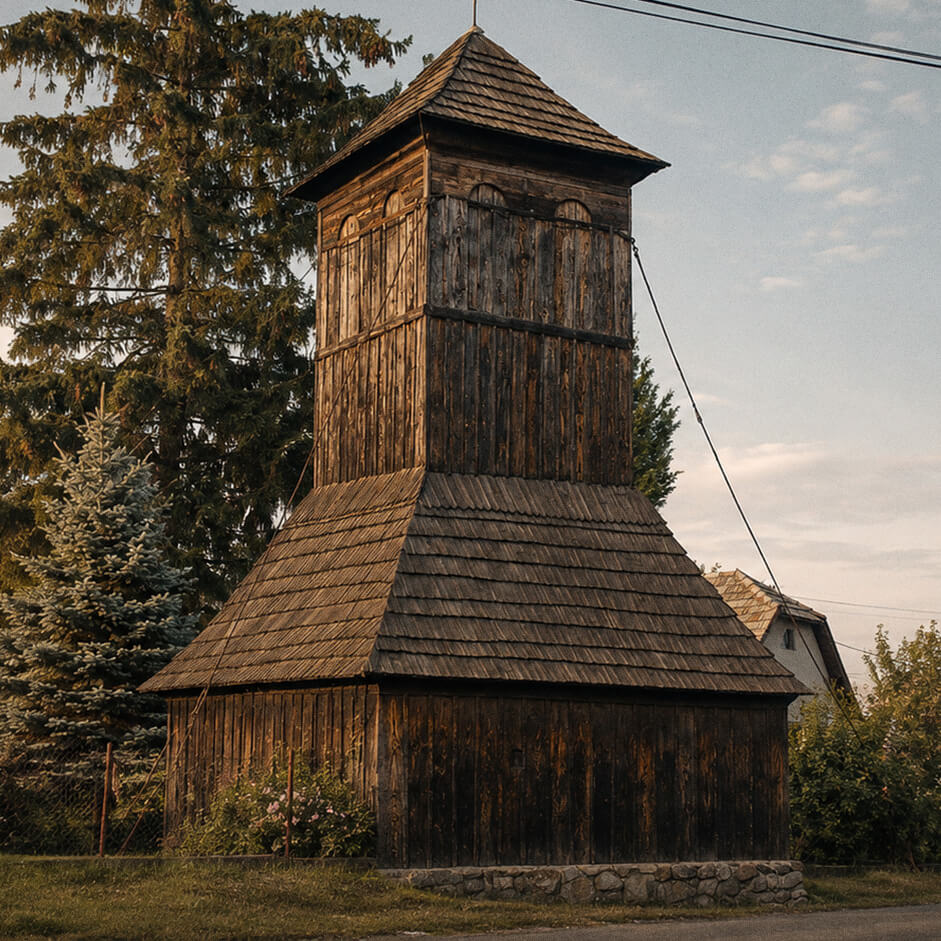
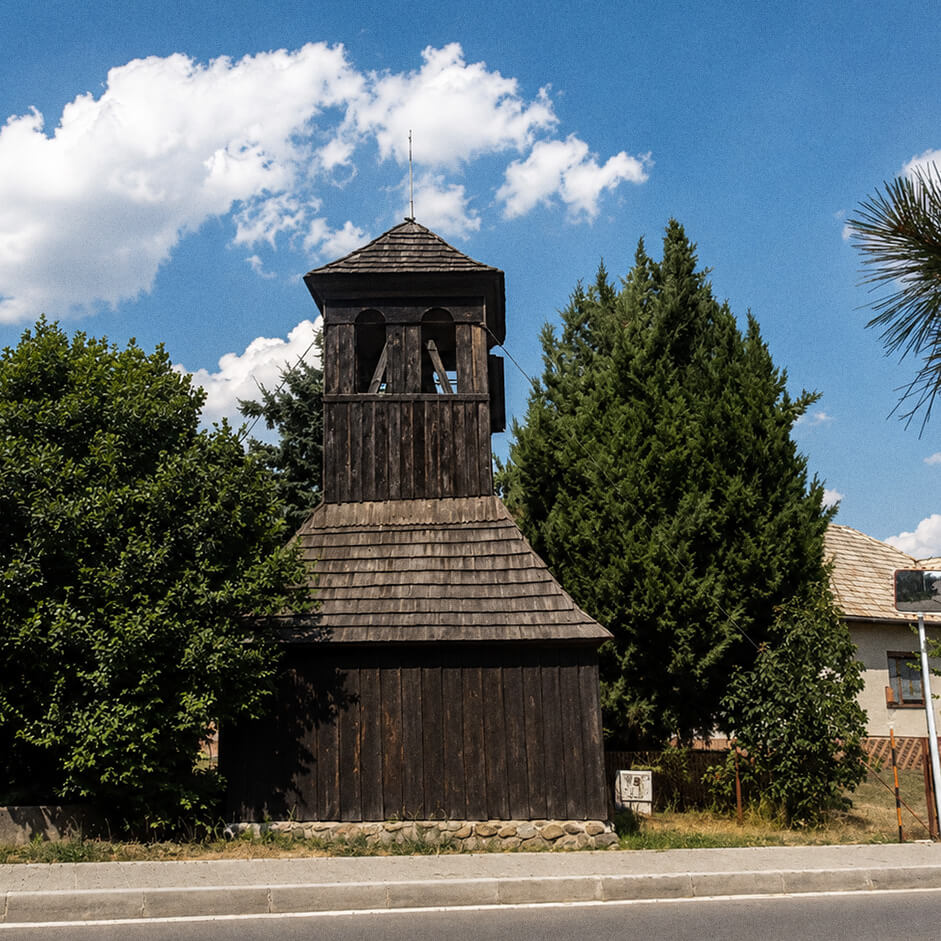
In the western part of Balog nad Ipľom, on the northern side of the road, stands one of the village’s most distinctive historic structures, an 18th-century wooden bell tower. Its simple appearance conceals an unusual structural design: the tower frame is supported by five main posts, including a central post known locally as the “emperor post”, which rises directly from the base beam. This construction makes the bell tower a notable example of traditional wooden architecture in the region.
A Legacy of the 18th Century
The available sources do not identify the exact year in which the bell tower was built or the person who made it. The surviving records indicate that it dates from the 18th century and has undergone several repairs since then. Its long survival shows that the structure is more than a former utilitarian building. It has remained a lasting part of the historical and religious setting of Balog nad Ipľom.
A Distinctive Timber Structure
Eight Posts in the Lower Section
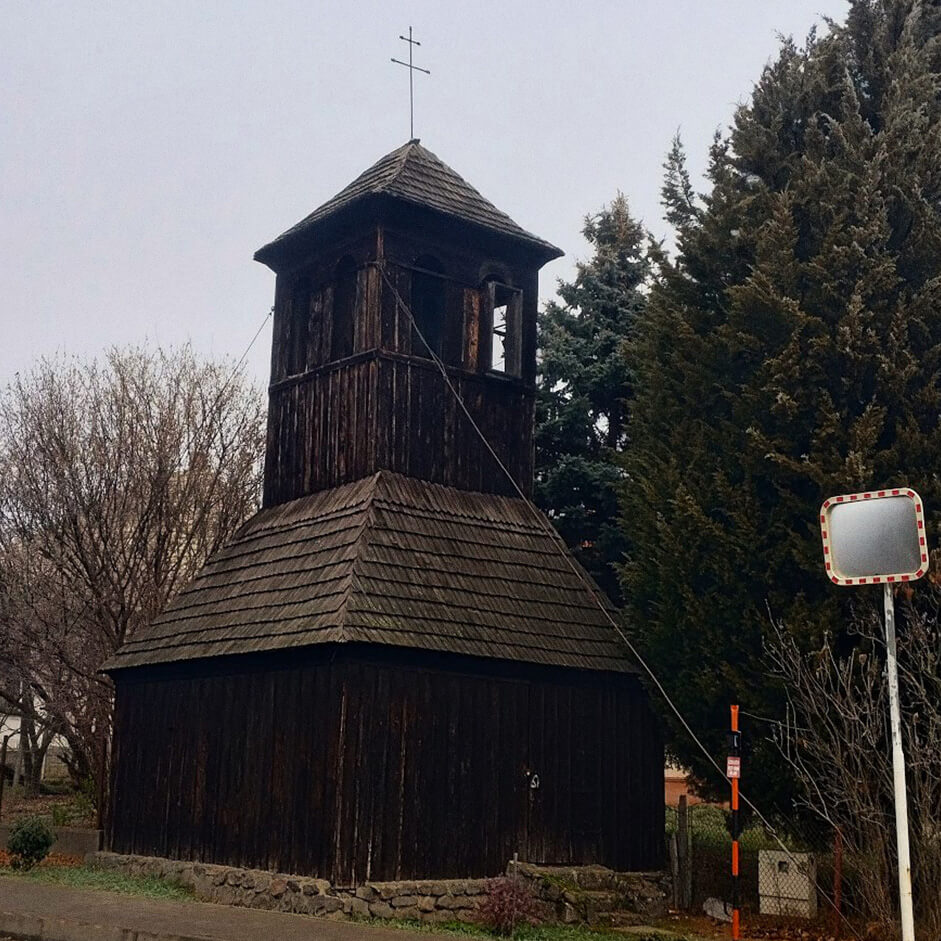
The bell tower stands on a masonry base built of rubble stone. Its broad lower section, traditionally described as the “skirt”, is supported by eight posts. Above it rises the main tower frame, carried by five principal posts. The fifth, central post is the so-called “emperor post”, extending from the base beam up to the upper structure and forming a key element of the tower’s framework.
Five Principal Supporting Posts
The use of five principal posts gives the bell tower of Balog nad Ipľom its distinctive structural character. Local historical literature describes this as a highly unusual construction method, noteworthy among the wooden bell towers of the Carpathian Basin.
Shingles, Bell Chamber and Double Cross
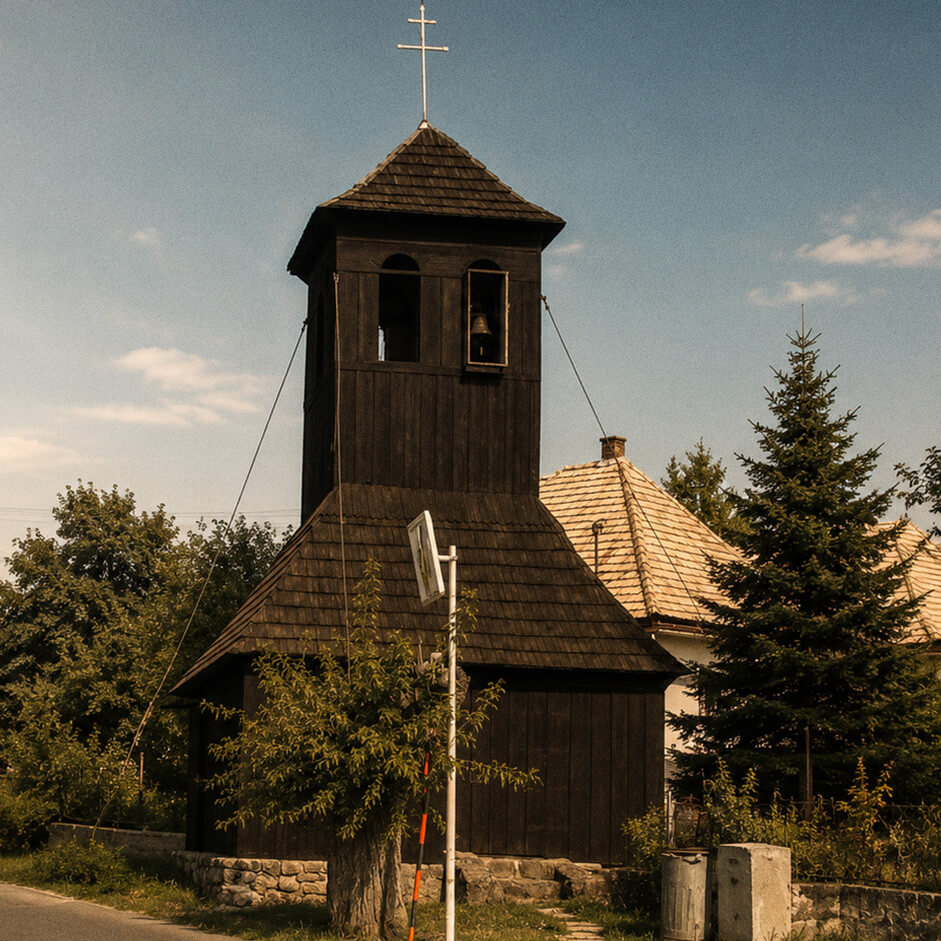
The lower section and the tower roof are covered with wooden shingles. The open bell chamber allows the sound of the bells to carry well beyond the immediate surroundings of the village. A large metal double cross crowns the pyramidal roof, giving the modest wooden structure a clearly recognisable silhouette.
The Sound of the Bells
The bell tower was built primarily to house the bells and allow them to be rung. Local historical sources also preserve the name of the Buda bell founder J. Brunner in connection with the bells.
Traces of Earlier Repairs
The 1861 Restoration
One of the best-documented events in the history of the bell tower is the repair carried out in 1861. According to an entry in the Historia Domus, the structure was renewed, re-shingled, and boarded that year. The record also notes a cost of 120 florins. This entry shows that maintaining the bell tower was already an important part of local parish life in the 19th century.
Restoration in the Late 20th Century
According to the available sources, the bell tower last underwent a major restoration in the early 1980s. This work helped preserve the structure, while its distinctive construction remains clearly visible today.
The Bell Tower in the History of Balog nad Ipľom
The bell tower stands independently rather than forming part of the church itself. Its position and design preserve a distinct reminder of the village’s former appearance and sacred setting. Together, St. Nicholas Church, the Chapel of the Holy Trinity, and the wooden bell tower form important elements of the built religious heritage of present-day Balog nad Ipľom.
The Bell Tower as an Example of Vernacular Architecture
The significance of the structure lies not in its size, but in its preserved timber framework and traditional carpentry techniques. Sources recognise it as a work of vernacular architecture and a rare surviving example of traditional wooden construction that can still be seen today.
A Preserved Part of Balog nad Ipľom’s Heritage
The bell tower remains a recognisable feature of the landscape of Balog nad Ipľom. Its age, construction, and surviving details give it a distinct local value, connecting the long continuity of tradition across the centuries with the life of the village today.
The quiet presence of the bell tower complements the other sacred landmarks of Balog nad Ipľom, including the medieval St. Nicholas Church, the Chapel of the Holy Trinity, and other places associated with the village’s religious life.
Heritage Data
| Item | Information |
|---|---|
| Name | Bell Tower of Balog nad Ipľom |
| Slovak name | Drevená zvonica |
| Construction | 18th century |
| Material | timber, rubble-stone masonry base |
| Structure | lower section supported by eight posts, tower frame carried by five principal posts |
| Roof covering | wooden shingles |
| Tower roof | pyramidal |
| Finial | metal double cross |
| Location | western part of Balog nad Ipľom, north side of Route 527 |
| Builder | unknown |
| Documented 19th-century repair | 1861 |
| Last major restoration | early 1980s |
| GPS | 48.078391, 19.127628 |
St. Nicholas Church
The medieval parish church of Balog nad Ipľom and one of the village’s most significant historic ecclesiastical buildings.
Chapel of the Holy Trinity
A small 18th-century chapel on the western edge of the village, distinguished by its distinctive architectural details.
Holy Crown
The local tradition associated with Balog nad Ipľom and the history of the crown adorning the church tower.
Timber, Bells, and a Centuries-Old Tradition
The wooden bell tower of Balog nad Ipľom is a simple structure, yet it preserves much of the village’s past. Its timber framework, distinctive arrangement of posts, and recognisable form are reminders of a building tradition of which relatively few comparable structures have survived in such condition. The bell tower is therefore more than an old building. It remains a visible part of the historic character of Balog nad Ipľom.