
St. Nicholas Church
St. Nicholas Church in Balog nad Ipľom is one of the significant medieval ecclesiastical monuments of the central Ipeľ region. The essential structure of the present building dates back to the second half of the 13th century and was enriched over the centuries with Romanesque, Gothic, and Baroque architectural elements. The church was later enclosed by a defensive wall, preserving together the building and its surroundings important traces of the village’s religious and historical past.
The character of the church is shaped by more than a single period or architectural feature. Its walls, vaults, portals, and furnishings bear the accumulated traces of different centuries.
A Church from the Árpádian Period
Art-historical and heritage descriptions date the construction of the present church to the second half of the 13th century. The building was originally erected as a single-nave church in the Late Romanesque style. Although it underwent several alterations over the centuries, its basic medieval structure and many of its early features have survived.
13th Century
The principal building phase of the present church dates to the second half of the 13th century.
Late Romanesque Style
The earliest surviving and recognisable layer of the building can be seen mainly in details of the nave and the southern façade.
Traces of Different Periods
Romanesque, Gothic, and Baroque architectural features can all be identified in the church.
Medieval Architectural Features
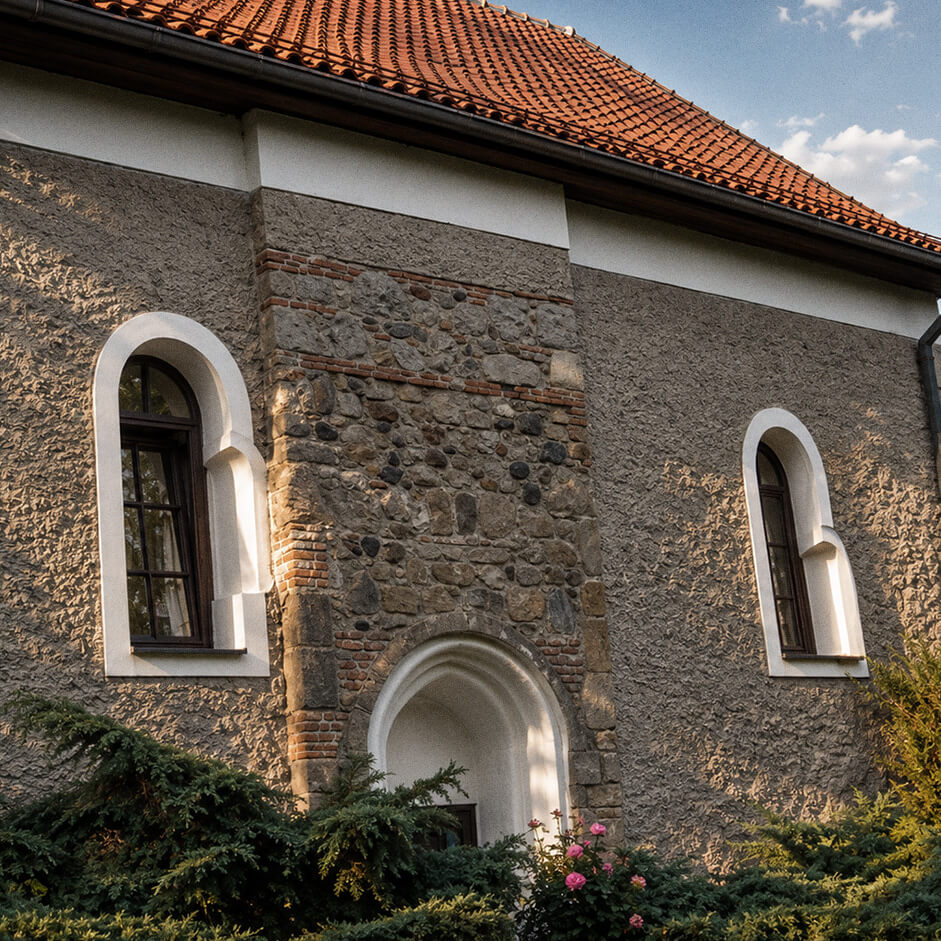
The nave preserves some of the church’s most important Romanesque features. On the southern side, remains of the earlier portal have survived, while the semicircular windows and banded framing on the façade point to the building’s original form.
The Southern Portal
The former southern entrance is no longer used in its original form. Despite later alterations, parts of the portal survived and were brought to light again during the 1979 restoration.
Gothic Presbytery
The presbytery is covered by a Gothic ribbed cross vault. The sacristy and its Late Gothic carved stone opening also belong to the Gothic phase of the church.
Carved Stone Features
The church’s early architectural remains include gargoyles and medieval stone carvings associated with the presbytery.
The Church Interior
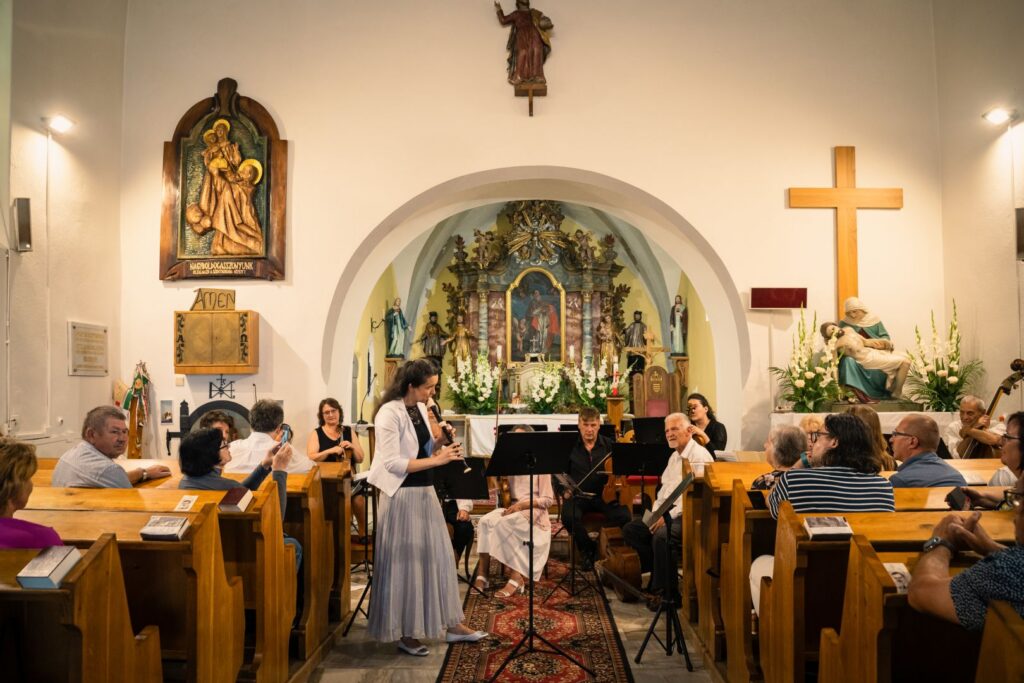
The interior of the church brings together traces of several historical periods. Alongside the surviving Romanesque elements, the Gothic vault of the presbytery, the Baroque furnishings, and works of art from later centuries all contribute to the appearance of the church today. Its interior preserves both the simplicity of the medieval building and the liturgical and artistic changes introduced over the centuries that followed.
The Baroque High Altar
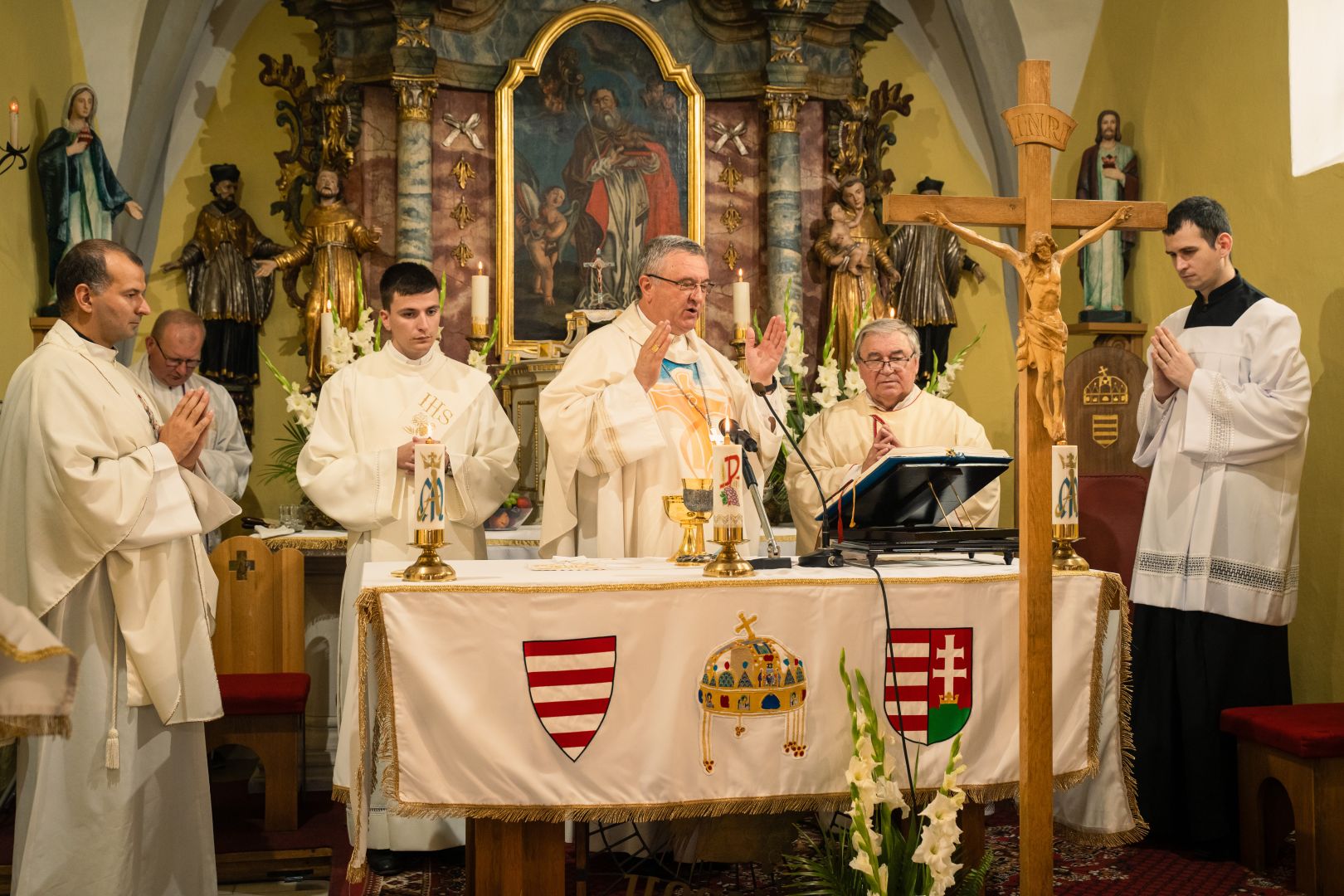
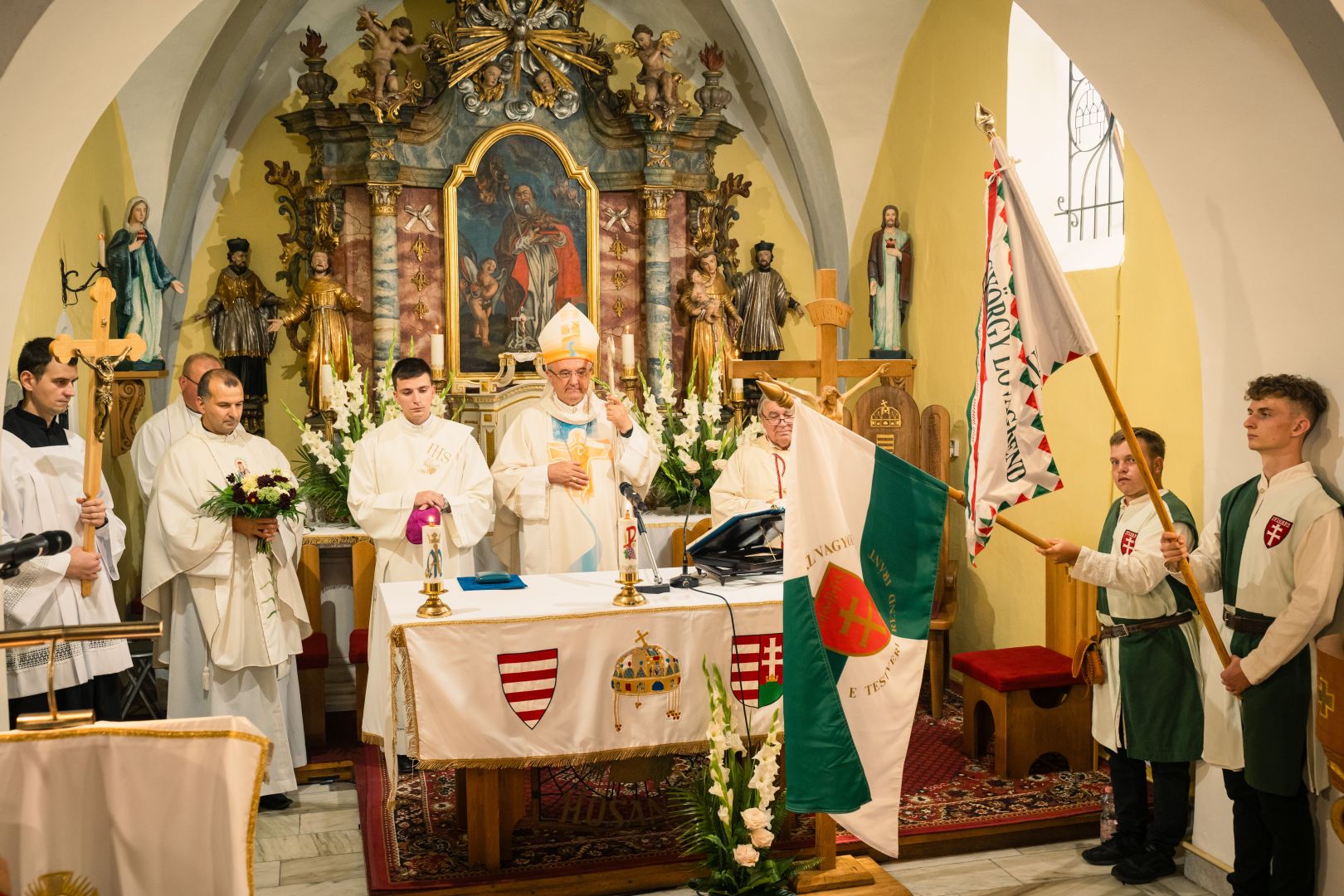
The church’s present high altar forms part of its 18th-century Baroque and Rococo artistic heritage. At its centre is an image of St. Nicholas, Bishop, which heritage descriptions date to the middle of the 18th century. The high altar is one of the most significant surviving features of the church’s Baroque transformation.
Mid-18th century. According to the available sources, the high altarpiece depicting St. Nicholas dates from the middle of the 18th century.
Sculptures and Carved Details
Christ and the Apostles
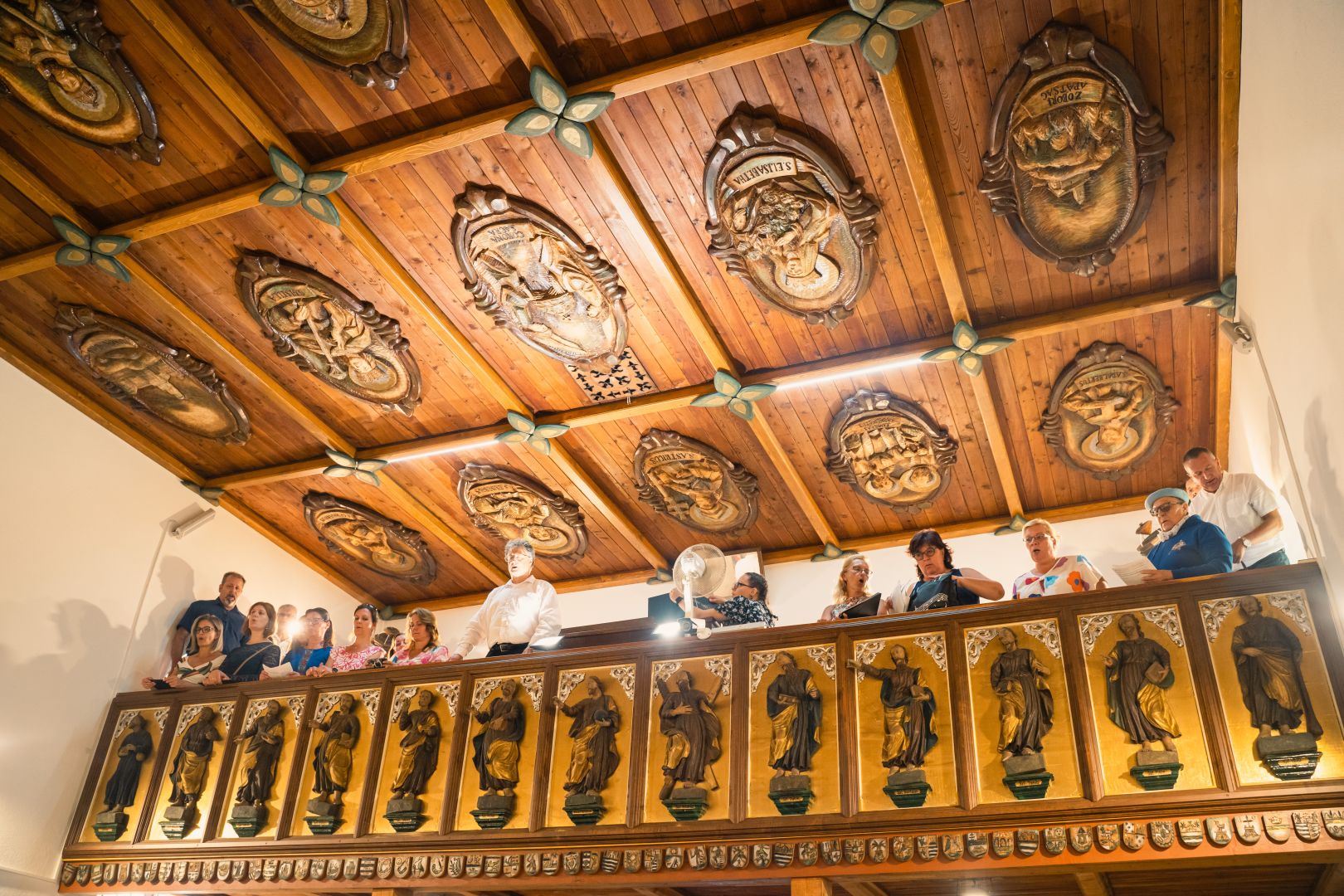
Carved figures of Christ and the twelve apostles are displayed along the choir parapet. The group is of earlier origin and forms an important part of the church’s artistic heritage.
Baroque Sculptures
The church furnishings include figures of several saints, among them St. Francis of Assisi, as well as other sculptures dating from the Baroque period.
Carved Panels on the Ceiling
The present ceiling of the nave features carved panels and decorative elements depicting Hungarian saints, historical figures, and religious symbols. The work is associated with the woodcarver Ján Chovanec.
The Church and Defensive Wall
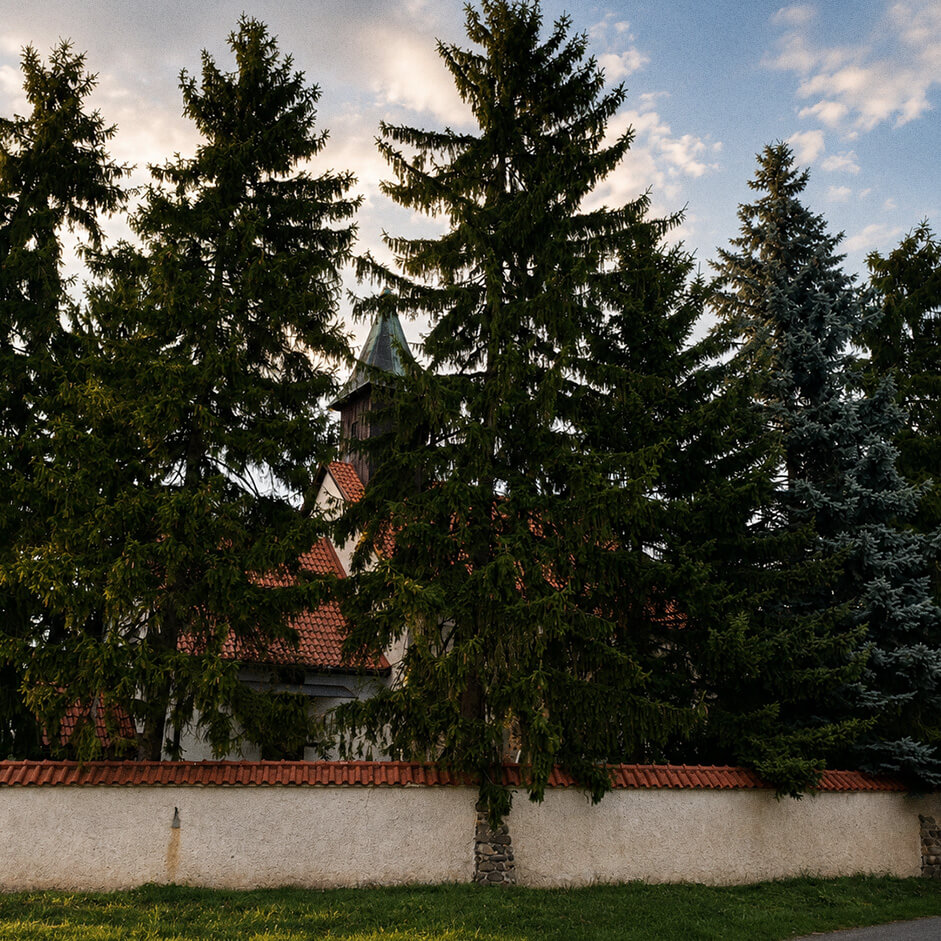
The church was later enclosed by a defensive wall. The wall includes loopholes, and the complex as a whole retains the character of a fortified church. Heritage descriptions place the construction of the defensive wall in the Late Renaissance period, dating it to the late 16th or early 17th century, with further alterations carried out at a later date.
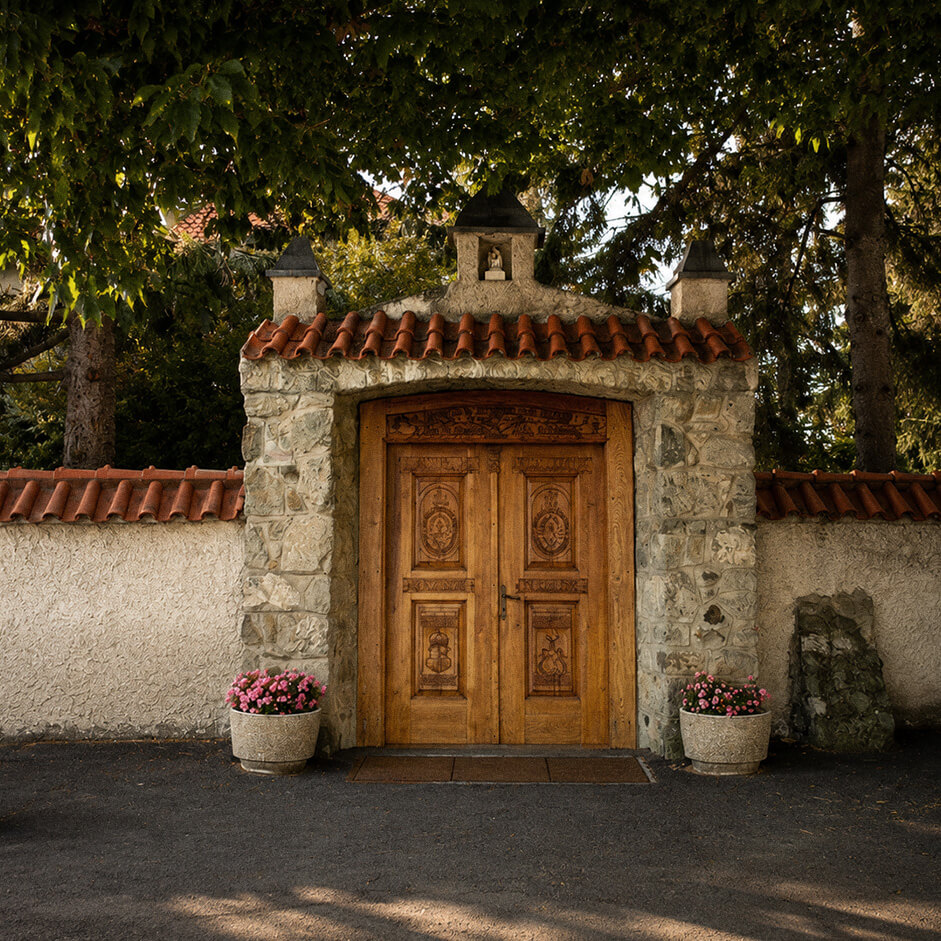
The 1896 Millennium Gate
The entrance to the church grounds is marked by a distinctive carved gate. Created in 1896, the gate is attributed by the sources to the local master woodcarver Imre Rados. Its decoration brings together religious and historical motifs, including the Sacred Hearts of Jesus and Mary, as well as representations of the Hungarian coat of arms and the crown.
Restoration and Renewal
A major restoration of the church took place in the late 1970s and early 1980s. During this work, the medieval building was partly altered and enlarged, a new roof structure was installed, and a larger vestibule was added on the western side. Several earlier architectural features were also uncovered again in the course of the restoration.
Traces of the Former Southern Portal. The former southern entrance was walled up during 20th-century alterations, but parts of the original portal remained preserved within the masonry and were brought to light again during the restoration.
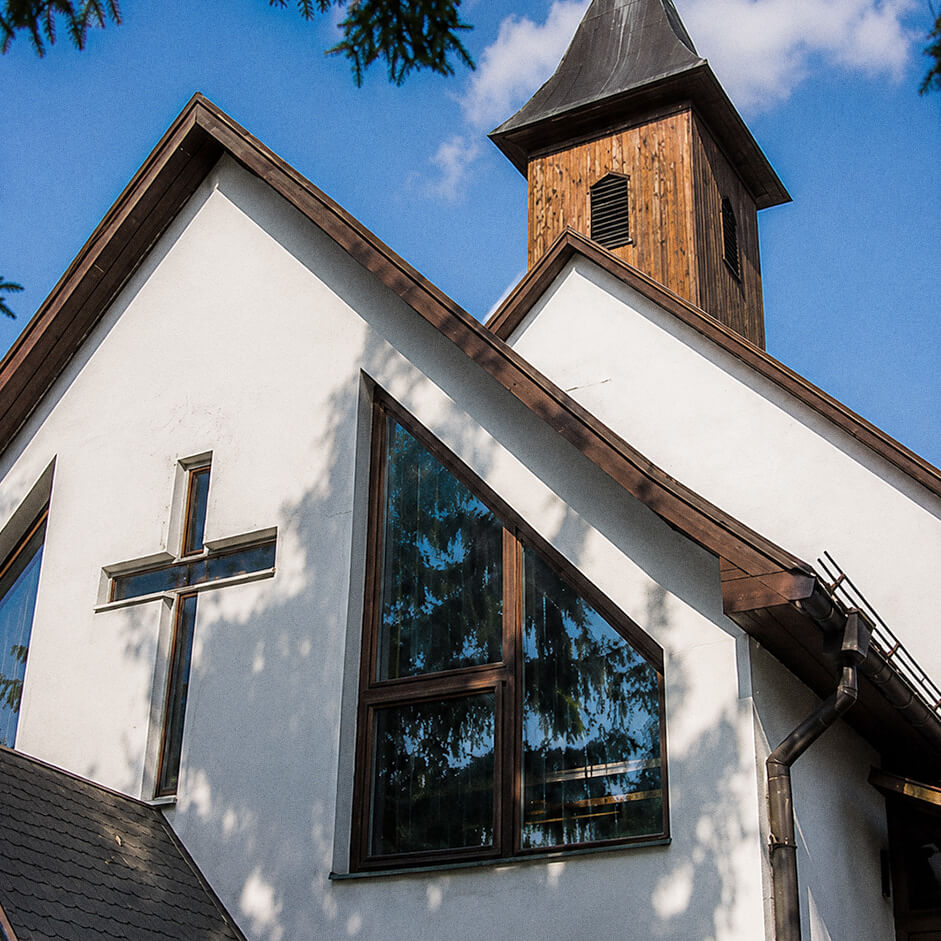
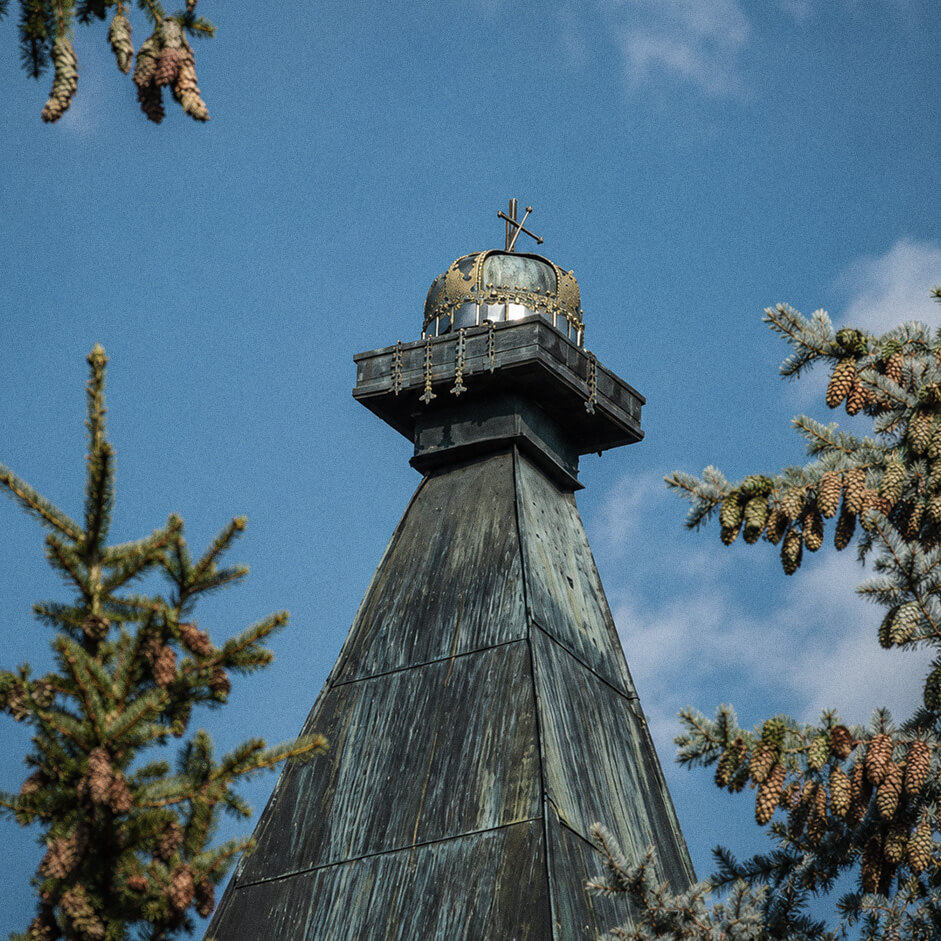
The Crown on the Tower
One of the church’s best-known features is the crown that adorns its tower. The present tower finial was installed in its current position during the 1979–1980 restoration. The crown motif itself, however, belongs to an older local tradition: heritage descriptions from the early 20th century already record that the church tower was crowned rather than topped with a cross.
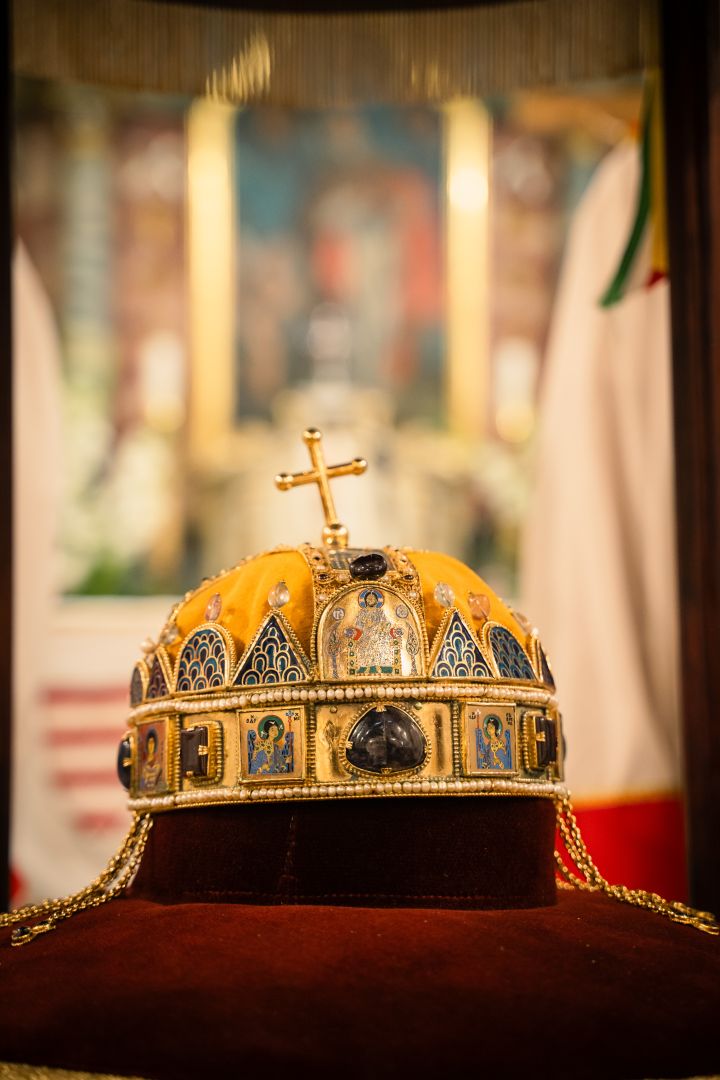
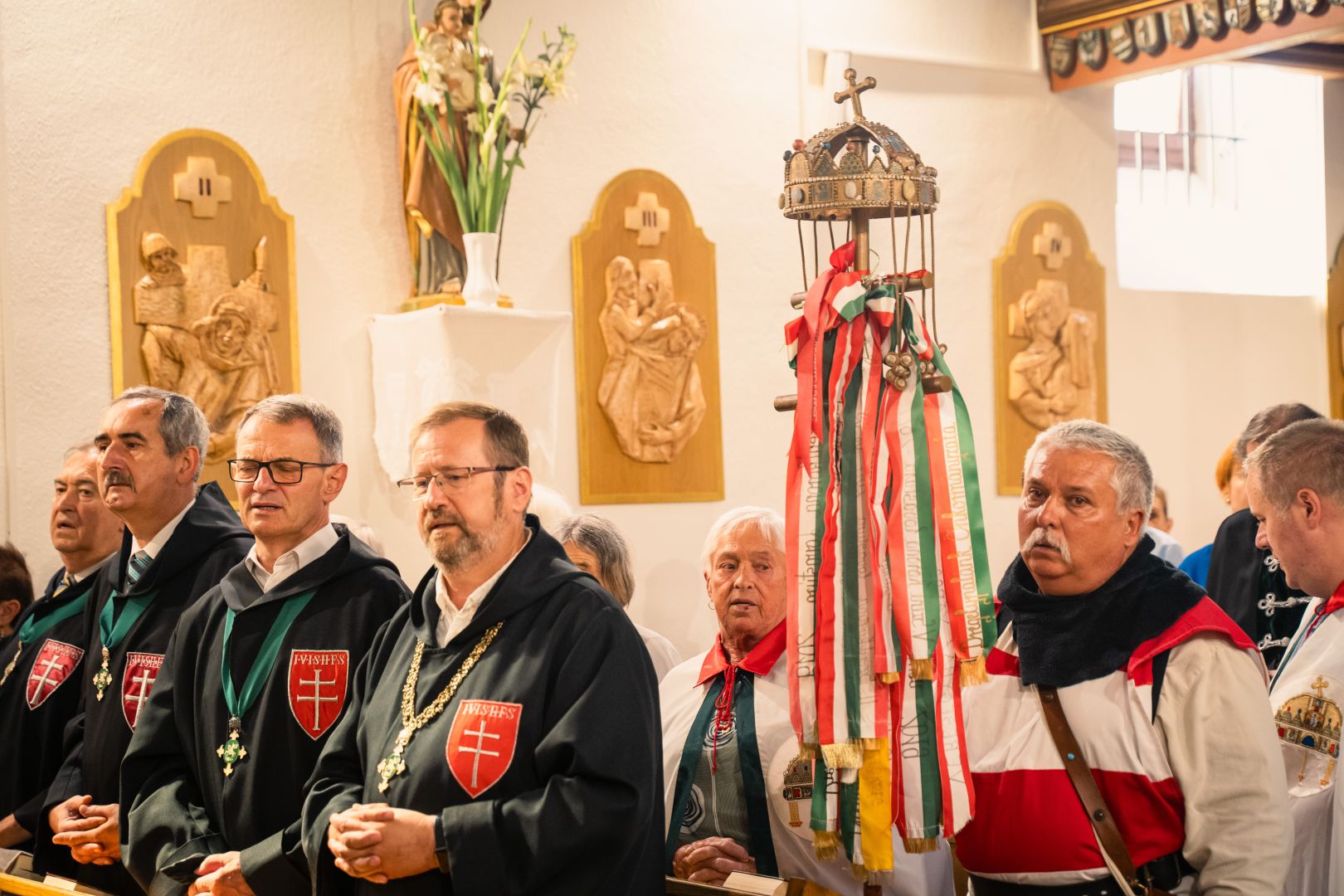
The crown on the tower is therefore more than a distinctive architectural feature. It is also a visible expression of the Holy Crown tradition associated with Balog nad Ipľom.
Heritage Significance
| Description | Details |
|---|---|
| Name | St. Nicholas Church |
| Location | Balog nad Ipľom |
| Date of origin | Second half of the 13th century |
| Original architectural layer | Late Romanesque |
| Later periods | Gothic, Baroque, and subsequent alterations |
| Heritage protection | National cultural monument |
| Church registry number | 422/1 |
| Fortification registry number | 422/2 |
A Living Church Within Centuries-Old Walls
St. Nicholas Church is more than a historical and artistic monument. It remains an active Roman Catholic church where the parish community continues its liturgical life. The medieval building is therefore not simply a relic of the past, but a sacred space that is still in use today. The current schematism of the Diocese of Banská Bystrica lists it as the parish church of the parish of Balog nad Ipľom.